How PR Makes Performance Marketing Perform Better?
When performance marketing does its job, but there’s scope to do more
If digital marketing was the only answer, most founders wouldn’t be feeling this uneasy.
The Digital-Only Trap (Most Businesses Are In It)
If any of this sounds familiar, keep reading:
- You’ve tried everything in digital
- ROAS rises… and then hits a ceiling
- CAC refuses to come down
- Performance marketing is doing its job — but only up to a point
- You’re unable to explore anything beyond digital because that’s all you know
Perhaps digital marketing isn’t the problem.
But maybe expecting it to build trust on its own is!
Digital Marketing Works Hard. PR Works Quietly.
Performance marketing is excellent at capturing existing demand.
PR, on the other hand, works on shaping belief before the demand even shows up.
One pushes people to act.
The other makes them comfortable wanting to act.
Think of it this way:
Digital is the salesperson in the room.
PR is the reputation that entered the room before you did.
When founders rely only on digital, every conversion has to start from zero trust. That’s expensive, exhausting and increasingly inefficient — especially in competitive B2B categories and high-consideration B2C decisions.
Here are 4 ways/ case studies where PR changed the game (without replacing digital)
1. When Trust Becomes the Bottleneck, Not Traffic
There are businesses where the challenge isn’t getting leads, but getting people to believe you.
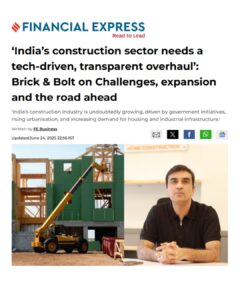
Take Brick&Bolt, a tech-enabled construction company.
Home construction is not an impulse decision. It’s high value, high emotion, and high risk. Even with strong digital efforts, customers were cautious because they were essentially betting their life savings on a brand they had only seen online.
Strategic PR helped shift that equation.
When prospective customers researched Brick&Bolt, they found credible national and regional media stories, each talking about a different aspect — technology, transparency, number of deliveries, etc
The impact wasn’t cosmetic.
It reduced hesitation, strengthened conversations, and made digital conversions easier — because the trust-building had already happened elsewhere.


2. When You Are Category Creating/ Innovating
Many startups assume digital will educate the market.
It rarely does — at scale.
Digital performs well when people already know what they’re looking for. PR becomes essential when people don’t even know why they should care.
This is where FlexiBees comes in.
They were offering vetted, flexible and remote talent at a time when many organisations didn’t believe this model was viable. Despite solid digital efforts, adoption was limited because the category itself needed legitimisation.
PR helped move the conversation from “Is this even possible?” to “This seems inevitable.”

A front-page feature in Economic Times – Entrepreneur edition, across 16 cities, reframed FlexiBees as a serious business solution, not a fringe idea.
The outcome spoke for itself:
- 5× app downloads
- 70,000 people reached in 48 hours
- Inbound corporate leads without incremental ad spends
Digital accelerated demand.
PR created it.
3. When You’re Up Against Much Bigger Brands (Without Their Budgets)
You might have a better product or sharper execution, but you’re up against brands that have been around for years and can spend millions just to stay visible. They don’t need to explain who they are — the market already assumes credibility.
In such situations, digital marketing gets expensive fast because you’re paying to introduce yourself, while larger brands are simply reinforcing familiarity.
This is where PR helps balance the scales.
PR allows growing businesses to borrow credibility through third-party validation. A well-placed media story or industry feature can put a younger brand in the same conversation as legacy players — without legacy budgets.
Once that perception gap narrows, digital marketing performs far more efficiently. People click with less doubt, sales conversations start warmer, and decisions come easier.
Big brands buy attention.
Smaller, growing brands earn trust — and then let digital do the scaling.
4. When Hiring Starts Getting Harder Than Selling
This is where many founders are caught off guard.
Great talent doesn’t just apply because your Instagram looks active. They look for signals of seriousness — coverage, leadership presence, and cultural narratives validated by external platforms.
PR quietly supports employer branding by ensuring that when someone Googles your company, they find more than just your own voice talking about yourself.
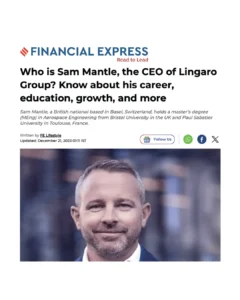
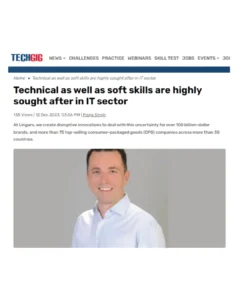
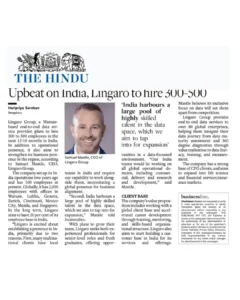
Case in point: Lingaro, a Polish IT firm expanding in India, wanted to strengthen its employer brand in a highly competitive talent market. We built a focused PR campaign around Employee Experience Mapping, positioning Lingaro as a people-first organisation through credible third-party media narratives rather than self-promotion.
Results (purely organic PR):
- 500% increase in job applications
- 280% rise in offer acceptances
- 45% increase in career page visits
Closing Thought
Digital marketing helps people find you.
PR helps them believe you.
When both work together, growth stops feeling like a grind and starts feeling intentional.
About the Author
Hi, I’m Tamanna Gupta, an IIMB graduate. With 20+ years of experience in sales and marketing across 60+ industries and 300+ brands, I’ve been in your shoes—navigating the startup world, making mistakes and learning along the way.
If you’re looking for a PR partner who gets startups and SMEs, let’s chat. And if you found this blog helpful, share it with your network. Because let’s face it—startups need all the help they can get!
If you’re a Startup, SME or Social Enterprise…
What is your objective? To demonstrate the power of your idea? To get your foot in a new door? To scale up and boost revenues? To create a measurable impact?
Tell us about you in the form below, and we’ll get back to you.